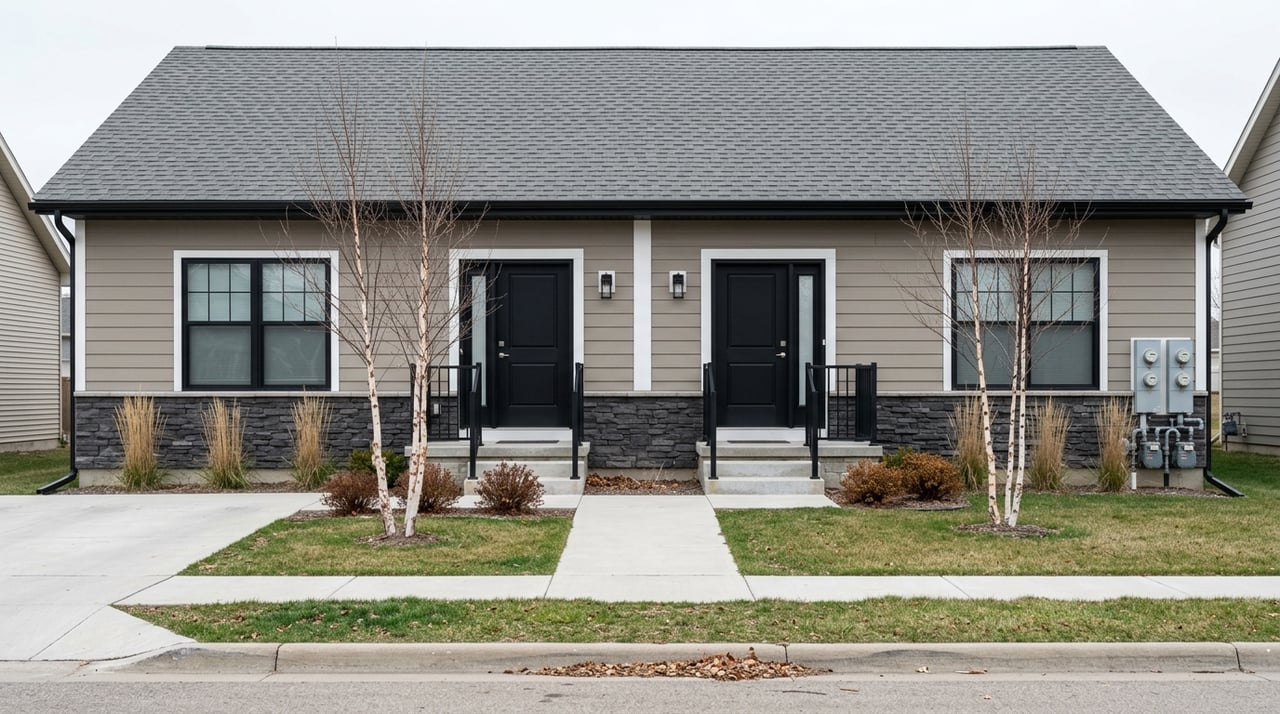
Thinking about buying a duplex or small multifamily property in Bismarck? You are not alone. For many small investors, these properties can feel like a smart middle ground between a single-family rental and a larger apartment building, but the numbers only work when you understand the local market. This guide walks you through what to watch in Bismarck, how to underwrite more carefully, and which local details can shape your next move. Let’s dive in.
Why Bismarck Draws Small Investors
Bismarck offers something many investors look for: stability. As North Dakota’s state capital and a regional hub for government, healthcare, public education, higher education, and manufacturing, the city has a diverse employment base that can support steady housing demand.
As of July 1, 2025, Bismarck’s population was estimated at 77,963, which reflects 5.9% growth from 2020. The Bismarck metro also posted a 1.8% unemployment rate in May 2026. When you pair that with major employers like the State of North Dakota, Sanford Health, Bismarck Public Schools, CHI St. Alexius, Bobcat/Doosan, the U.S. Government, the City of Bismarck, and Bismarck State College, you get a market that many small investors see as relatively steady.
What Duplexes and Multifamily Look Like
If you are shopping for small multifamily in Bismarck, expect a limited visible inventory at any given time. Current listing snapshots across major portals suggest that duplexes, triplexes, fourplexes, and small apartment buildings do come up, but not in huge numbers.
A notable share of visible listings appears in the 58501 and 58503 ZIP codes. That makes central Bismarck an area worth watching if you want to track opportunities and compare rents, condition, and layout.
You may see properties such as:
- Side-by-side duplexes with two 3-bedroom, 2-bath units
- Duplexes with attached garages
- Triplexes marketed with rental history
- Fourplexes with mixed one-bedroom and two-bedroom units
- Small 8-unit buildings with off-street parking and basic unit mixes
These differences matter because a duplex with garages and larger unit sizes may rent very differently from a fourplex with smaller units and fewer amenities. In Bismarck, details like parking, laundry, garage space, and utility setup can have a real impact on income.
Start With Local Rent Reality
One of the biggest mistakes small investors make is relying on broad averages without checking current local comps. In Bismarck, the numbers show why that can be risky.
The Census reports a 2020 through 2024 median gross rent of $999 in Bismarck. At the same time, a current rental-market snapshot shows an average asking rent of $1,390, with 173 available rentals and a range from $485 to $3,315. Those figures measure different things, so they should not be treated as interchangeable, but together they suggest that current asking rents may be running above the longer-term Census median.
For a more practical starting point, visible apartment listings in Bismarck show about:
- 2-bedroom units: roughly $850 to $1,650
- 3-bedroom apartments: roughly $1,285 to at least $1,875+
HUD’s FY2026 fair market rent schedule for the Bismarck metro shows:
- 0BR: $961
- 1BR: $1,030
- 2BR: $1,175
- 3BR: $1,634
- 4BR: $1,884
These HUD figures are best used as a conservative baseline, not as direct market rent. In real life, your achievable rent will depend on the condition of the unit, whether utilities are included, and features like garages, parking, and laundry.
How To Underwrite More Carefully
A duplex or fourplex can look attractive on paper, but the local details often decide whether the deal truly works. In Bismarck, careful underwriting means using actual property-level information instead of broad national rules of thumb.
A good review usually starts with annual gross income and then subtracts operating expenses to estimate net operating income, or NOI. Operating expenses typically include items like property taxes, insurance, utilities paid by the owner, maintenance and repairs, management fees, legal or accounting costs, landscaping, and other day-to-day costs of running the property.
It is also important to separate normal operating expenses from capital improvements. Big-ticket items like roofs, HVAC systems, windows, and doors should be reserved for separately rather than blended into routine monthly operating costs.
Key numbers to verify
Before you write an offer, make sure you confirm:
- Actual current rent roll
- Lease terms and expiration dates
- Vacancy assumptions
- Utility splits between owner and tenants
- Property tax history on the specific parcel
- Insurance estimates
- Repair and maintenance trends
- Age and condition of major systems
Why Parcel-Specific Taxes Matter
In Burleigh County, residential assessed value is 50% of market value, and taxable value is 9% of assessed value. That is useful context, but it is still not enough to estimate taxes accurately from a simple rule of thumb.
The smarter move is to model taxes from the actual parcel statement for the property you are considering. This becomes especially important when you are comparing similar-looking duplexes or small multifamily buildings that may have different tax burdens based on valuation history and property specifics.
Utility Splits Can Change The Math
In small multifamily investing, utility setup can shift your returns faster than many first-time investors expect. A property where tenants pay electricity but the landlord pays gas, water, and garbage may perform very differently from one where more utilities are passed through to tenants.
That means you should review utility responsibility unit by unit, not just building wide. If a listing advertises strong gross rent but owner-paid utilities are high, your actual NOI may be much lower than it first appears.
Local Rules You Should Know
If you plan to own rental property in Bismarck, you should understand the city’s rental housing standards. These standards apply to rental housing in the city and extraterritorial jurisdiction and cover core habitability items such as structural integrity, weatherproofing, locks, ventilation, safe exits, plumbing, fire protection, heating, pest elimination, and electrical systems.
If a tenant complaint is escalated through the city, the process requires written notice to the owner or manager and a 10-day response window before formal action. Complaints also cannot be anonymous. For investors, that is a reminder that deferred maintenance can become more than a budget issue if it affects compliance.
North Dakota’s Attorney General also states that landlords must keep buildings up to code, maintain safe common areas, provide garbage containers and removal, and install smoke detectors in each unit. The state also notes that security deposits can be up to one month’s rent plus a pet deposit, rent generally cannot be raised until the lease ends, and month-to-month rent increases require 30 days’ written notice.
Zoning And Permit Checks Matter
If you are considering a duplex conversion, an addition, or a value-add rehab, zoning and permits should be part of your review before closing. Bismarck states that its current zoning ordinance remains in effect until October 1, 2026, when a new Land Development Code becomes effective.
The city’s Building Inspections Department handles permits, inspections, plan review, and zoning enforcement. Bismarck is also updating its building-code regulations to 2024 editions of several major codes. If your investment plan depends on changing use, adding units, or making larger upgrades, verify those requirements early.
A Practical Screening Approach
When you are sorting through duplexes and small multifamily opportunities in Bismarck, a simple framework can help you stay focused. Start with the local comp picture, then move into the building-specific numbers and legal details.
Use this checklist first
- Compare the asking rent to current local listings for similar unit sizes
- Check whether garages, parking, laundry, or utility inclusions justify higher rents
- Review the rent roll and tenant payment history
- Pull the parcel-specific tax statement
- Estimate insurance with the actual property in mind
- Identify owner-paid utilities
- Review visible deferred maintenance and likely capital items
- Verify zoning and permit needs if updates are part of your plan
- Confirm the property appears to meet rental housing standards
This kind of screening can help you avoid overpaying based on projected rents that may not match the local market. It also gives you a clearer picture of whether a property works as-is or only works if several assumptions go your way.
What This Means For Small Investors
Bismarck can make sense for small investors who want duplexes, triplexes, fourplexes, and other small multifamily properties in a market with a relatively stable economic base. The opportunity is not about chasing broad national averages. It is about understanding the local rent picture, the real expense structure, and the compliance details that come with owning rental housing here.
If you are serious about buying in Bismarck, your best next step is to underwrite conservatively. Use current local comps, verify taxes at the parcel level, study utility splits, and look closely at code status and improvement needs before you make an offer.
When you are ready to explore investor-friendly opportunities in the Bismarck-Mandan area, Melanie Staiger - Main Site can help you sort through listings, compare local options, and move forward with clear, practical guidance.
FAQs
What types of small multifamily properties show up in Bismarck?
- Visible listings have included duplexes, triplexes, fourplexes, and small apartment buildings, with many examples appearing in the 58501 and 58503 areas.
What rent numbers should you use for Bismarck duplex underwriting?
- Start with current local comps for similar units, then compare them with broader benchmarks like Census rent data and HUD fair market rents to stay conservative.
How should you estimate property taxes for Burleigh County multifamily?
- Use the actual parcel statement whenever possible, because Burleigh County tax modeling is more reliable at the property level than through a general rule of thumb.
What local rental rules matter for Bismarck landlords?
- Investors should understand Bismarck rental housing standards, city complaint procedures, and North Dakota landlord responsibilities for code compliance, safe common areas, garbage service, and smoke detectors.
Why do utility splits matter for Bismarck multifamily investing?
- Utility responsibility can significantly affect NOI, so you should verify which costs the landlord pays and which costs tenants pay before relying on projected returns.
Should you check zoning before buying a Bismarck duplex or fourplex?
- Yes. If your plan includes a conversion, addition, or major rehab, you should verify zoning, permits, and inspection requirements with the city before closing.